How Ships Keep Sailing Safely for Decades: EAGLE Industry’s Manufacturing and Services Tailored to Each Vessel
EAGLE Industry has supported the global shipping industry for decades through its marine business. The company was established in 1964 when NOK’s mechanical seal manufacturing division became independent. Since then, it has expanded its business across five segments: automotive and construction machinery, general industrial machinery, semiconductors, marine, and aerospace. Its core technologies include mechanical seals, specialized valves, and other products designed to prevent the leakage of liquids and gases.
On October 1, 2026, EAGLE Industry and NOK came together again through a business integration. Of EAGLE Industry’s five business segments, the marine business is one of the clearest expressions of the company’s strengths. Centered on seal systems for ships, the business covers everything from research and development to manufacturing and maintenance. In this article, we take a closer look at the technology and services that help support maritime transportation around the world.
Stern Tube Seal Systems: Supporting Safe Navigation and Protecting the Marine Environment
Much of what we rely on in everyday life — including food, materials, and energy resources — is transported by sea. Around 80% of international trade by volume is carried this way, highlighting the essential role ships play in the global economy.*
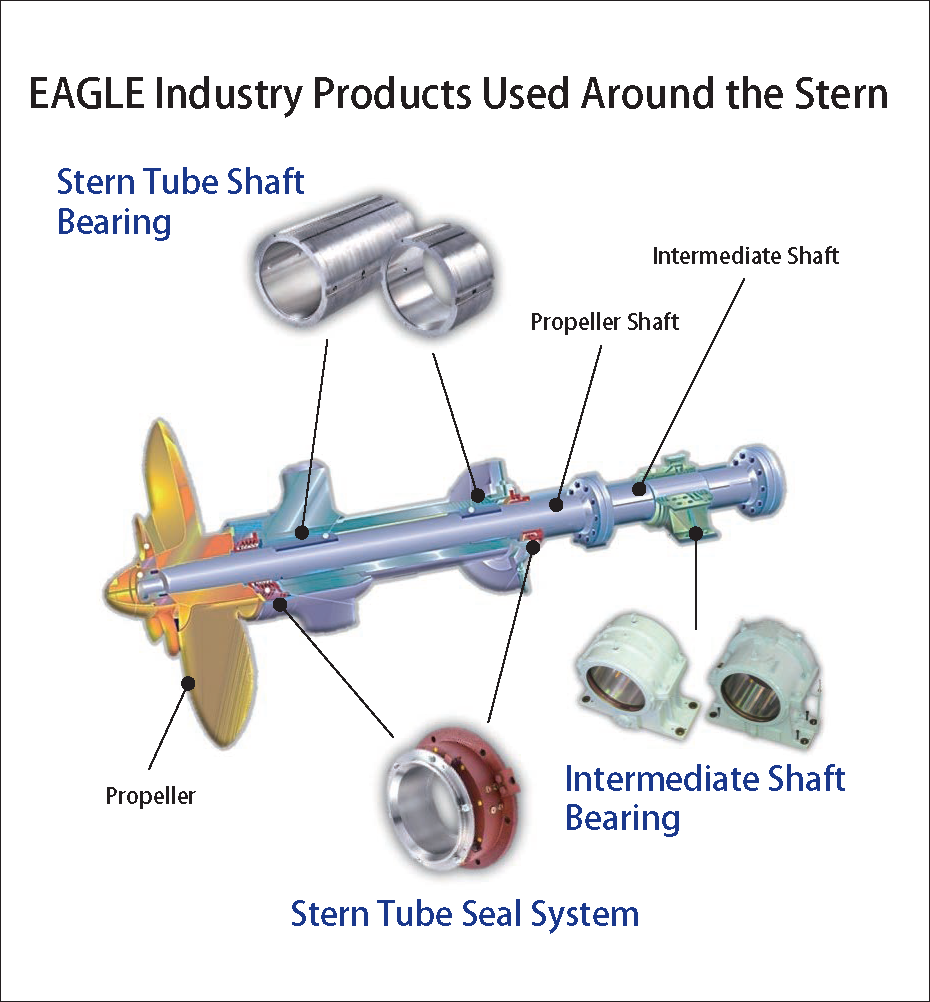
Ships move by transmitting power from the engine to the propeller shaft, which turns the propeller underwater. A stern tube seal system is installed where this shaft passes through the hull. It keeps seawater from entering the ship while also preventing the lubricating oil that helps the shaft turn smoothly from leaking into the sea. In this way, it plays an important role in both safe navigation and protecting the marine environment.
EAGLE Industry developed its first stern tube seal in 1968. Today, under the KEMEL brand, it offers a range of marine products, including stern tube seal systems. The company holds a leading share of the global market for stern tube seal systems used on newly built large vessels. Its products are mainly used on ships of 10,000 gross tons or more, including transport vessels, cruise ships measuring 300 to 400 meters in length, and specialized vessels that require advanced technologies.
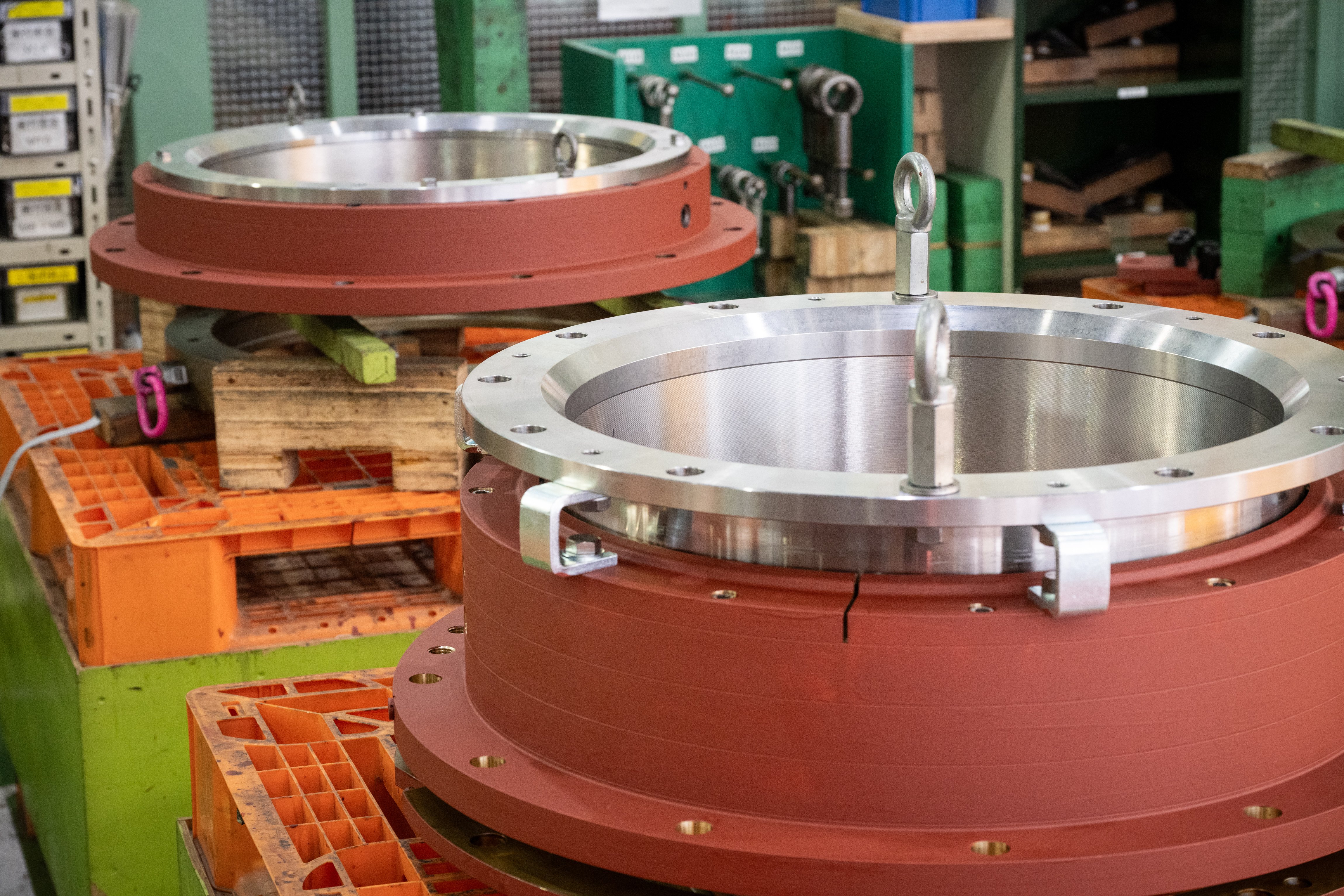
Because the specifications of large vessels are tailored to each shipowner’s requirements, every stern tube seal system is custom-made. Before manufacturing begins, sales and design teams review the specifications in detail and work closely with the shipyard to reflect the needs of each vessel in the final design. Major components are manufactured at multiple sites before being brought together for assembly, inspection, packing, and shipment. Some are more than one meter in diameter and can weigh up to 1.5 tons. A single unit may require several hundred bolts, and the entire assembly process is carried out by skilled craftspeople.
United Nations Conference on Trade and Development (UNCTAD), Review of Maritime Transport
https://unctad.org/topic/transport-and-trade-logistics/review-of-maritime-transport?utm
EAGLE Industry Products Used Around the Stern
Data Management Supporting Vessel Safety Over Decades
Support does not end when a product is delivered. Large vessels are generally operated for 20 to 30 years and typically enter dry dock around once every five years for major inspections and maintenance. During these dockings, stern tube seals are inspected and serviced, and components such as seal rings are replaced. Over the course of their long operating lives, large vessels may also change hands several times. A ship built in Japan, for example, may be sold to an overseas shipowner and later pass to an owner in another country. To continue providing the parts and services needed for safe navigation, EAGLE Industry needs to keep track of the products installed on each vessel and its maintenance history, even when the shipowner, vessel name, or flag state changes.
To do this, EAGLE Industry uses the unique identification number assigned to each vessel by the International Maritime Organization (IMO). Through its customer relationship management (CRM) system, the company manages information such as product specifications, component replacement histories, and points to note at the next maintenance service. This data helps EAGLE Industry anticipate what each vessel may need next. For example, it can identify when a ship is due for dry docking or continue supporting a vessel even after it changes ownership. In this way, the company provides decades of after-sales support, beginning with the delivery of its products to a newly built vessel and continuing throughout the vessel’s service life.
A Global Network Providing 24/7 Support
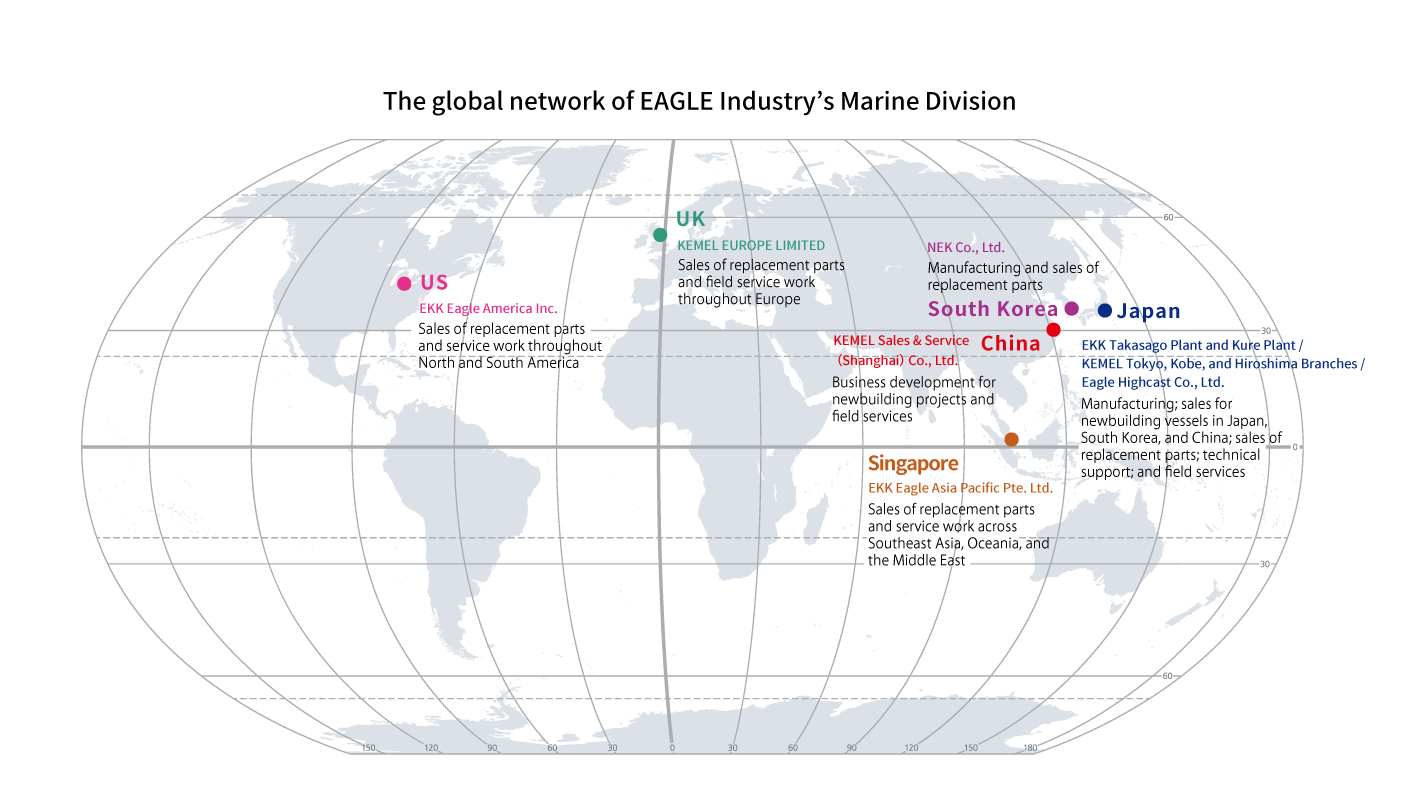
Large ships travel around the world, and problems can occur at any time and in any location. To provide rapid support wherever it is needed, EAGLE Industry has built a global service network with its own facilities in Japan, China, Singapore, the UK, and the US, supported by distributors around the world. This allows the company to respond 24 hours a day, 7 days a week. For example, if a problem occurs near Japan on a vessel owned by a European shipowner, a service request received in Europe can be passed to the team in Japan, allowing an engineer close to the vessel to respond quickly.
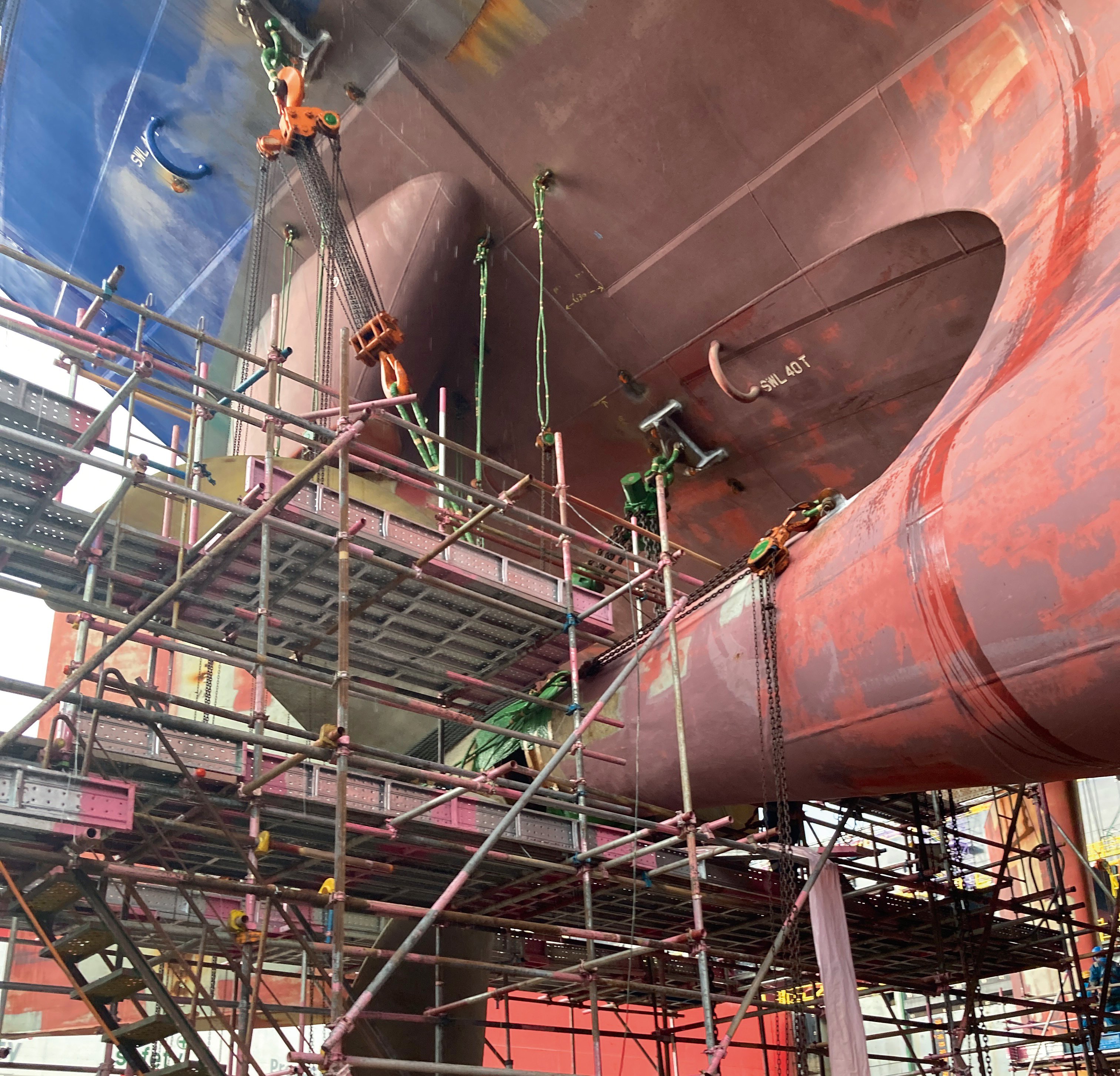
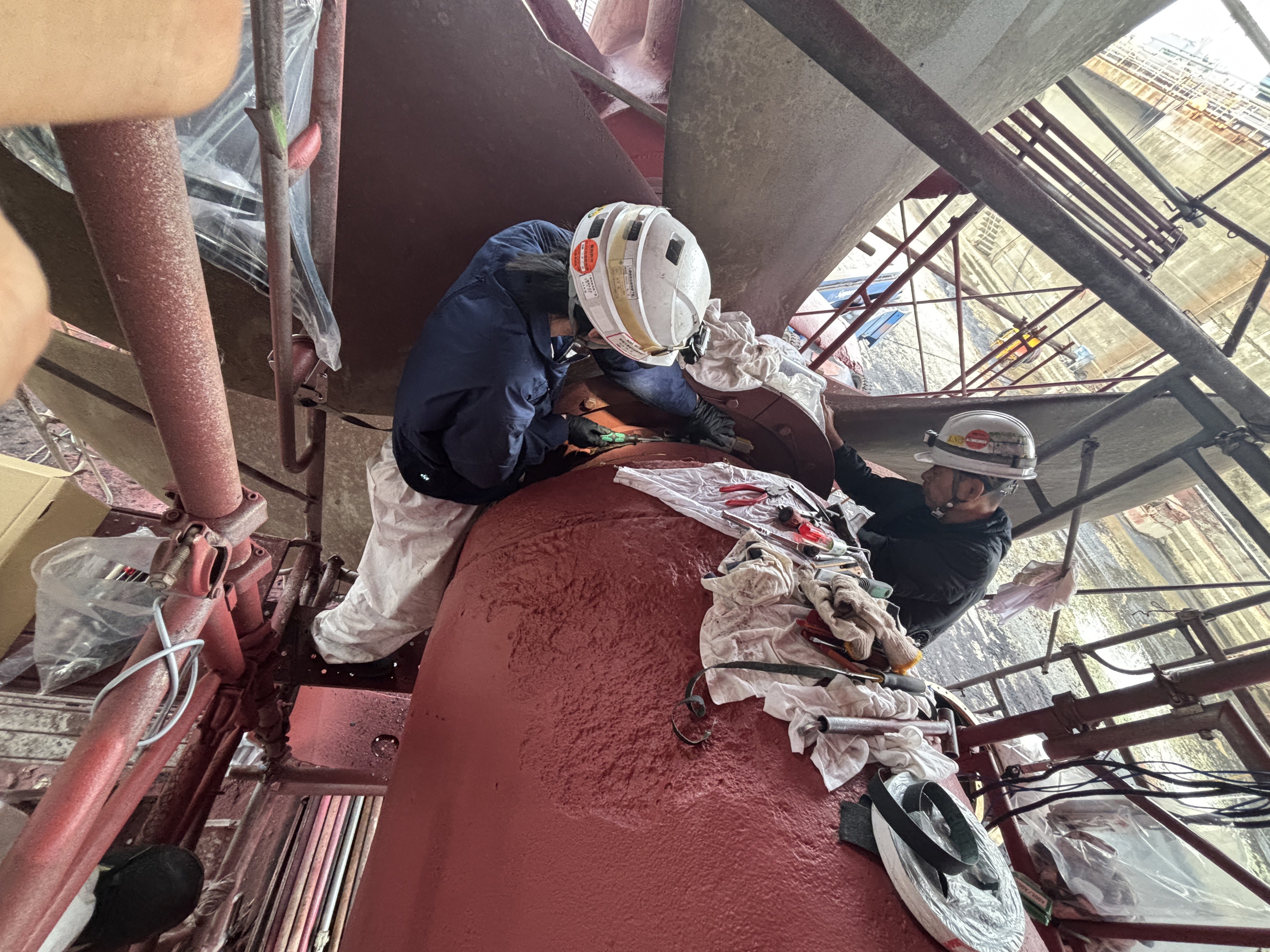
At repair docks, engineers remove barnacles and other buildup and replace old seal rings. The new rings are joined using specialized jigs and adhesive. It is demanding work that requires exceptional precision: even a deviation of a few millimeters is unacceptable. If a problem such as an oil leak occurs while a vessel is at sea, emergency repairs may even be carried out by erecting scaffolding around the vessel and raising the stern above the waterline.
Environmental Technologies and Autonomous Shipping Solutions for the Future of Maritime Transport
The shipping industry is undergoing major change. Geopolitical risks are affecting shipping routes, the industry is transitioning to vessels powered by alternative fuels to reduce CO₂ emissions, and environmental regulations governing maritime transport are becoming increasingly stringent. To reduce environmental impact, EAGLE Industry has developed products such as stern tube air seals, which use air to prevent seawater from entering the vessel and lubricating oil from leaking into the sea. The company has also developed biodegradable lubricants and seal-ring materials designed to work with them.
EAGLE Industry is also developing monitoring systems for stern tube seals and bearings in response to crew shortages and the growing adoption of autonomous shipping. During a voyage, crew members need to monitor and maintain these components according to their condition. On a large vessel, however, simply reaching the engine room where the stern tube seal is located can take considerable time and effort. By detecting signs of trouble early, these systems can help crews carry out maintenance at the right time and address issues before they lead to a breakdown. This is expected to ease crew workloads and support vessel operations with smaller crews.
Even as new technologies create new opportunities, EAGLE Industry’s commitment to meeting the needs of each individual vessel remains unchanged. Its Marine Division will continue to support ships throughout their long operating lives and help sustain the maritime transportation networks that keep the global economy moving.